 |  |  |  |  |
Evaluate Data and Collaborate with Stakeholders
Data can be intimidating. Below are tips to get you started on how to evaluate data, collaborate with others, and prepare for strategic planning.
1. Review Trends
DISTRICTS (Confidential Data)
Log in to your KCTC account. At left:
- Under Select a Location, select View Districts and Buildings.
- Under View Reports, select from these Reports:
- At A Glance: School climate, substance use
- Depression/Suicide: Optional depression/suicide survey questions
- Summary: Risk/protective factors, substance use, bullying
- Social, Emotional, and Character Development: Principles, decision making, self management/awareness, social skills; see SECD Report Help Video
COUNTIES or COMMUNITY MENTAL HEALTH CENTER (CMHC) REGION (Public Data)
- Under Select a Location, select County or CMHC.
- Under View Reports, select from these Reports:
- At A Glance: School climate, substance use
- Depression/Suicide: Optional depression/suicide survey questions.
- Community: Risk (substance use, fentanyl) and protective factors.
- View Interactive report (see 5-minute training video)
- Pdf reports are also available
2. Dig Deeper
Consider what underlying causes may be driving change. For example, if reported depression increased, look at key metrics that often correlate with depression, like:
Also, look for:
- Risk factors that are increasing or are unacceptably high, including substance use and antisocial behaviors.
- Protective factors that are decreasing or unacceptably low.
To decide if a number is unacceptable:
- Compare your data with county and state data. Differences of 5% or more are probably significant.
- Look at your data over time. Risk factor rates that have steadily increased and protective factors that have steadily decreased are probably significant.
3. Collaborate
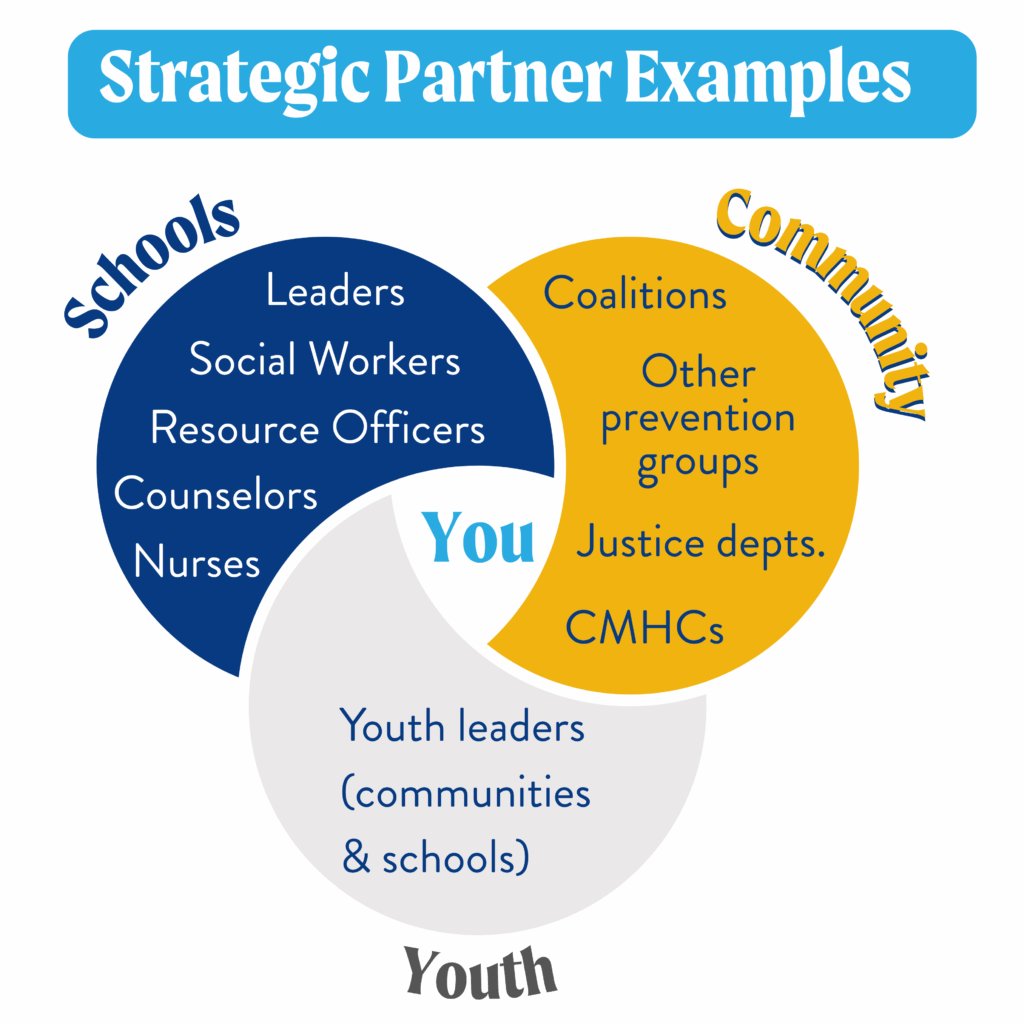
Discuss next steps with strategic partners. If you can, incorporate survey discussions into existing processes to make it easier.
For example, you may already have a Student Success, Multi-Tiered System of Supports, or Response to Intervention Team that meets regularly. Or, your district may have youth advocacy organizations like YLinK you can utilize for youth-led initiatives.
Together, brainstorm ideas by asking questions like:
- Who should be included in discussions? (Examples at right)
- Is there low-hanging fruit you can tackle easily?
- What are your top 1-3 priorities?
- What are your biggest barriers?
- Consider current policies like discipline and bullying. Are they working?
Your local prevention coalition can also be a great partner to discuss potentially launching new or building on existing programs to help youth.
Bottom line: Each group brings unique insight. The more feedback you have, the better informed strategy will be when you’re ready to Act.